About
About Rebate Clock
One question, answered properly: how much the federal battery rebate is worth for your battery on the day it goes in.
Updated
Who runs Rebate Clock
Rebate Clock is an independent Australian site, published by William Morphy (ABN 83 715 276 265). It isn't owned by, and doesn't work for, any company it compares.
Write to us at hello@rebateclock.com.au: questions, corrections and complaints all go to that one address.
- Publisher
- William Morphy
- ABN
- 83 715 276 265
- Contact
- hello@rebateclock.com.au
- Figures checked
- Based in
- Australia
Why it exists
The Cheaper Home Batteries discount shrinks every January and July until the end of 2030, and the amount depends on two numbers most quotes don’t show: the battery’s usable capacity on the approved list, and the day its compliance certificate is issued. A buyer comparing a quote dated November with an install booked for January can lose hundreds of dollars without seeing it on the page.
Rebate Clock puts those two numbers on a dial. Pick the battery, set the install date, and it shows the certificates and dollars the regulator’s own rules give, and what the next step-down would take. The guides explain the rules behind it in plain words.
How it makes money
Rebate Clock is free to use. Some links on this site are referral links: if you sign up or buy through one, we may earn a commission, at no extra cost to you. Commission never changes which batteries we recommend or the order we rank them in. There is no advertising, and no company can pay to be listed, to rank higher or to be reviewed.
How it ranks
The 19 batteries are listed by brand, A to Z, and nothing else moves them. Each battery page judges one narrow thing: how its sizes fall across the rebate’s 14, 28 and 50 kWh steps, so you can see where an extra module stops paying its way.
We don’t pick a best battery for your home, because that depends on your usage, your solar and your tariff, which we never ask for.
When the figures were checked
Every figure on Rebate Clock sits beside a link to its source and the date we checked it. The figures were last checked in full on , and each page shows its own updated date.
Our rebate maths is tested against answers taken from the Clean Energy Regulator’s own STC calculator, and the test runs on every change to the site. Battery capacities come from the Clean Energy Council’s approved list, which the program itself uses. The schedule, the certificate price and the state top-ups each show the date we last read them.
Found a mistake?
Email hello@rebateclock.com.au with the page's address and what you think is wrong. A link to the provider's own page, a screenshot of a bill or a quote helps us check it quickly.
We check the claim against the primary source. If we got it wrong, we fix the page and move its updated date. If the provider has changed its terms, we update every page that quotes them.
We don't change a ranking or a verdict because a company asks us to; we change it when the facts behind it change.
Photo credits
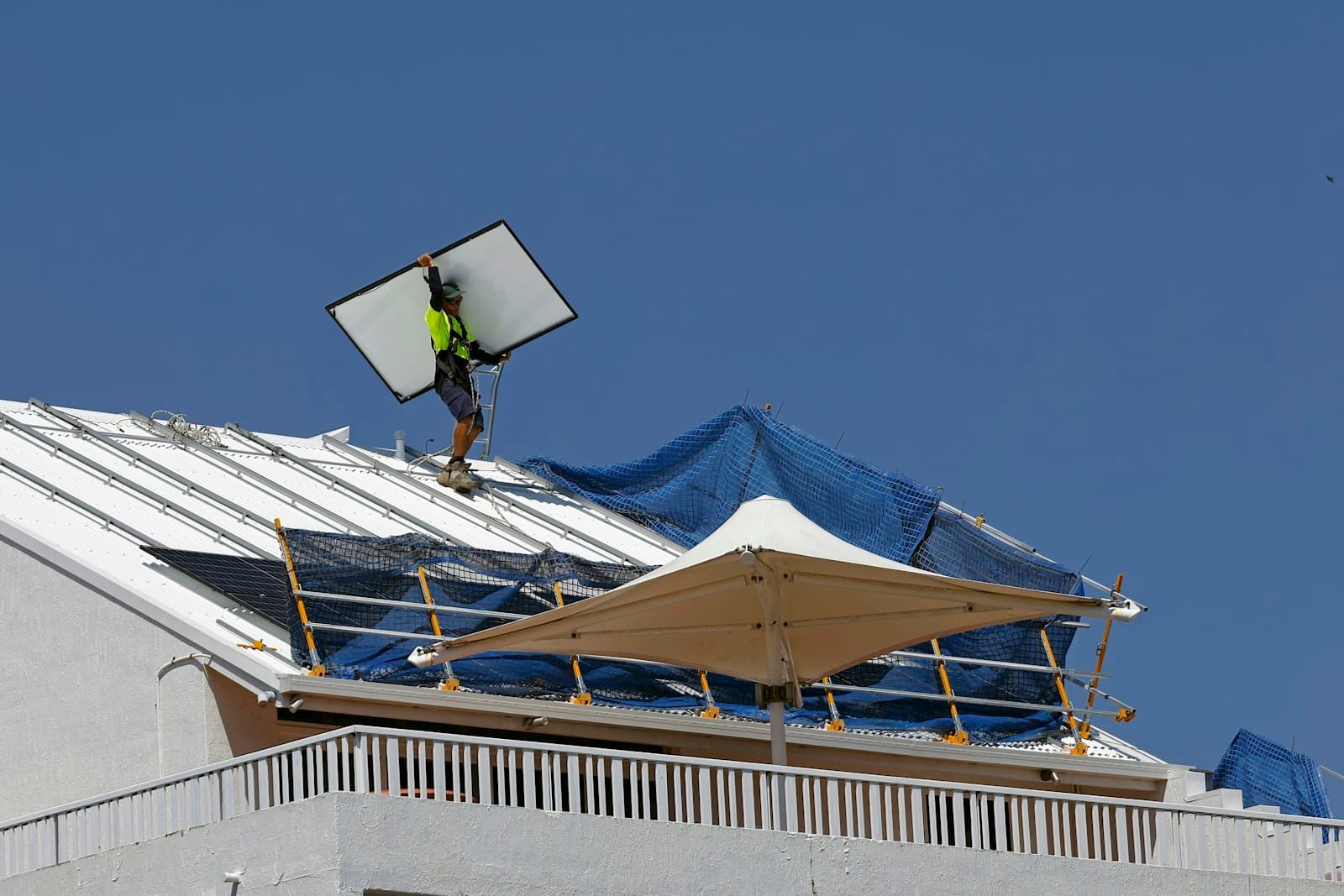
- An installer in hi-vis and a harness carries a solar panel across a white metal roof behind safety rails — David Clode on Unsplash, under the Unsplash Licence.
- A wall calendar with red pins on several dates and the 30th circled in red — Towfiqu barbhuiya on Unsplash, under the Unsplash Licence.
- New townhouses in a row of garages, with a bank of dark solar panels on the tiled roof behind — Troy Mortier on Unsplash, under the Unsplash Licence.
- An Australian suburb from above, with solar panels on most of the roofs along its curving streets — Shanjir H | Photo4life AU on Unsplash, under the Unsplash Licence.